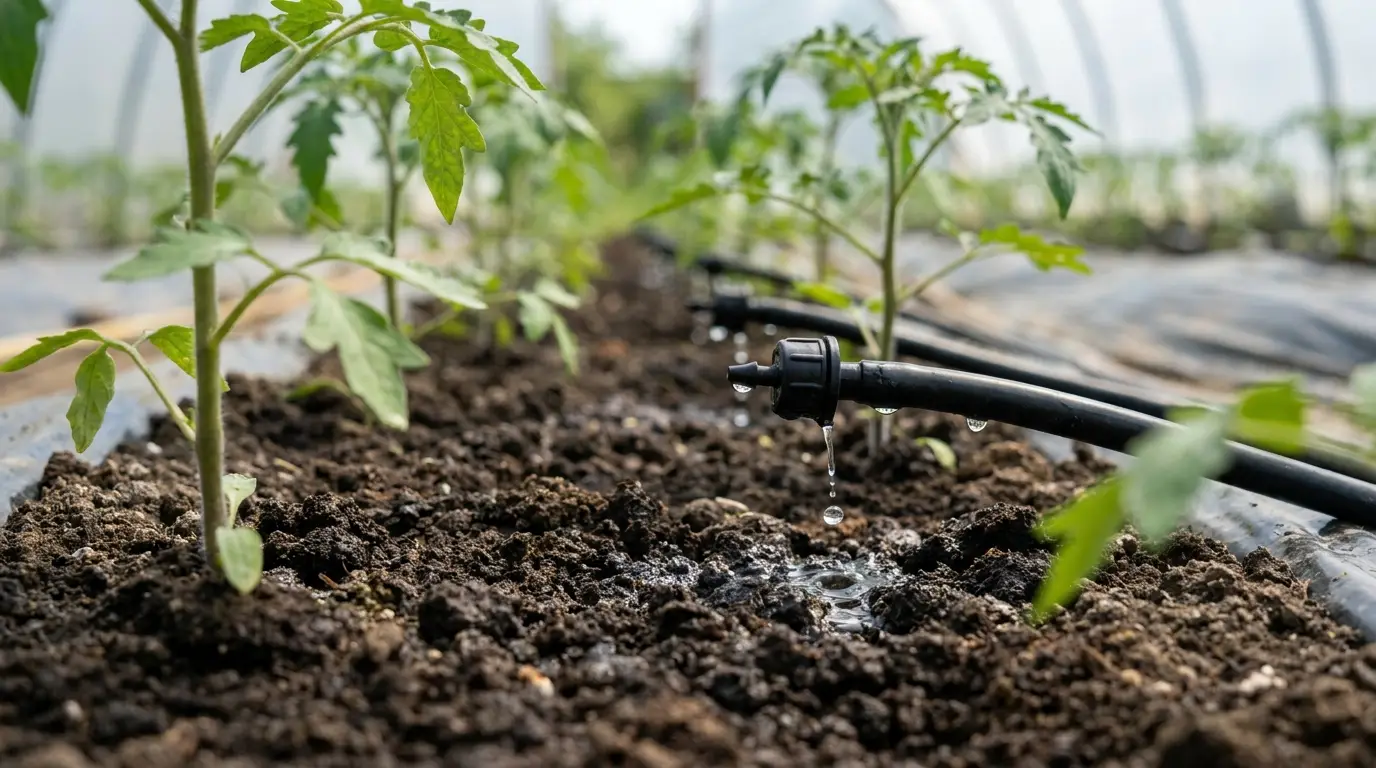
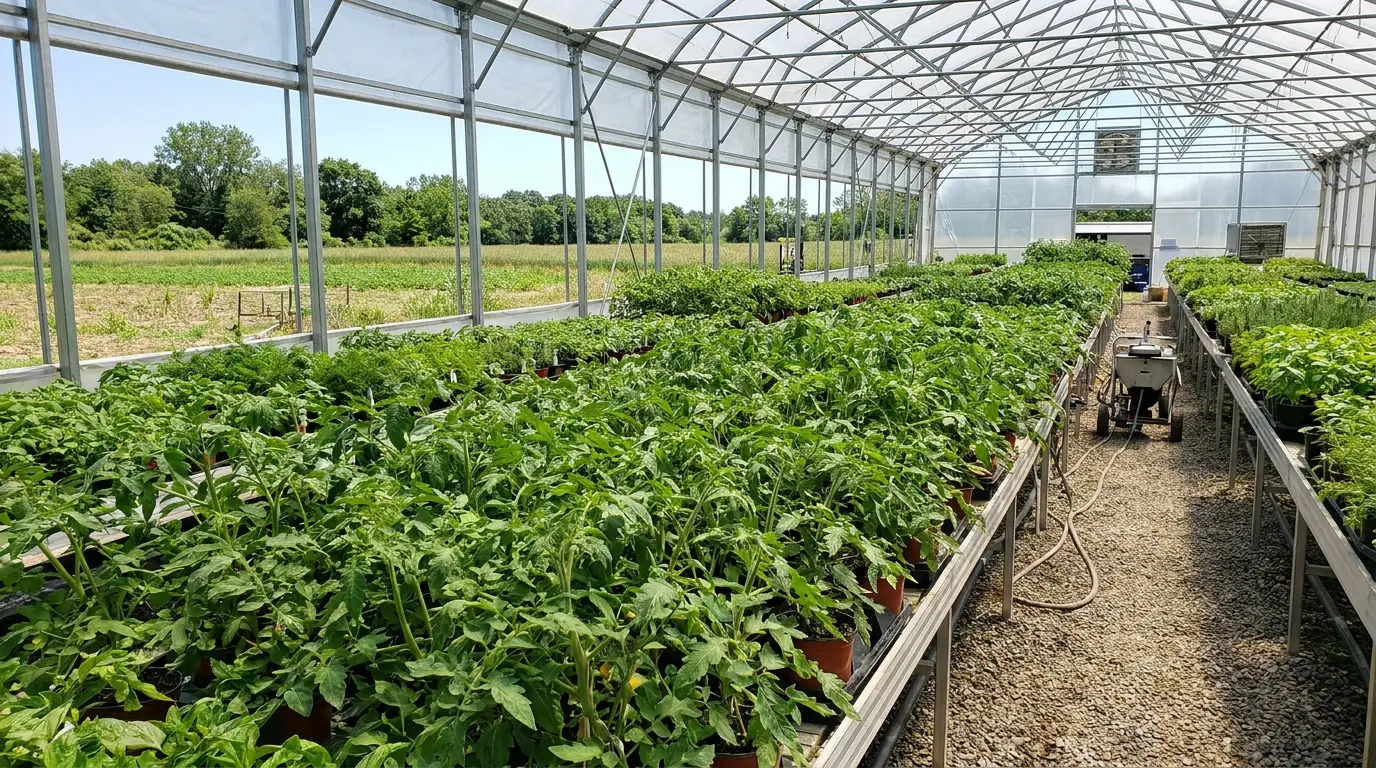
The most effective strategy for cutting winter heating costs in a greenhouse has two steps: first stop the heat from escaping — double inflated film reduces heat loss by 30–40%, a thermal screen saves 30–50% of heating energy, and sealing air leaks adds another 3–10% — and only then choose a heating system. The most energy-efficient method is root-zone heating: instead of the whole air volume, the roots themselves are warmed, which saves 20–30% of fuel. This order is no accident — 70–80% of a greenhouse's energy costs go to heating.
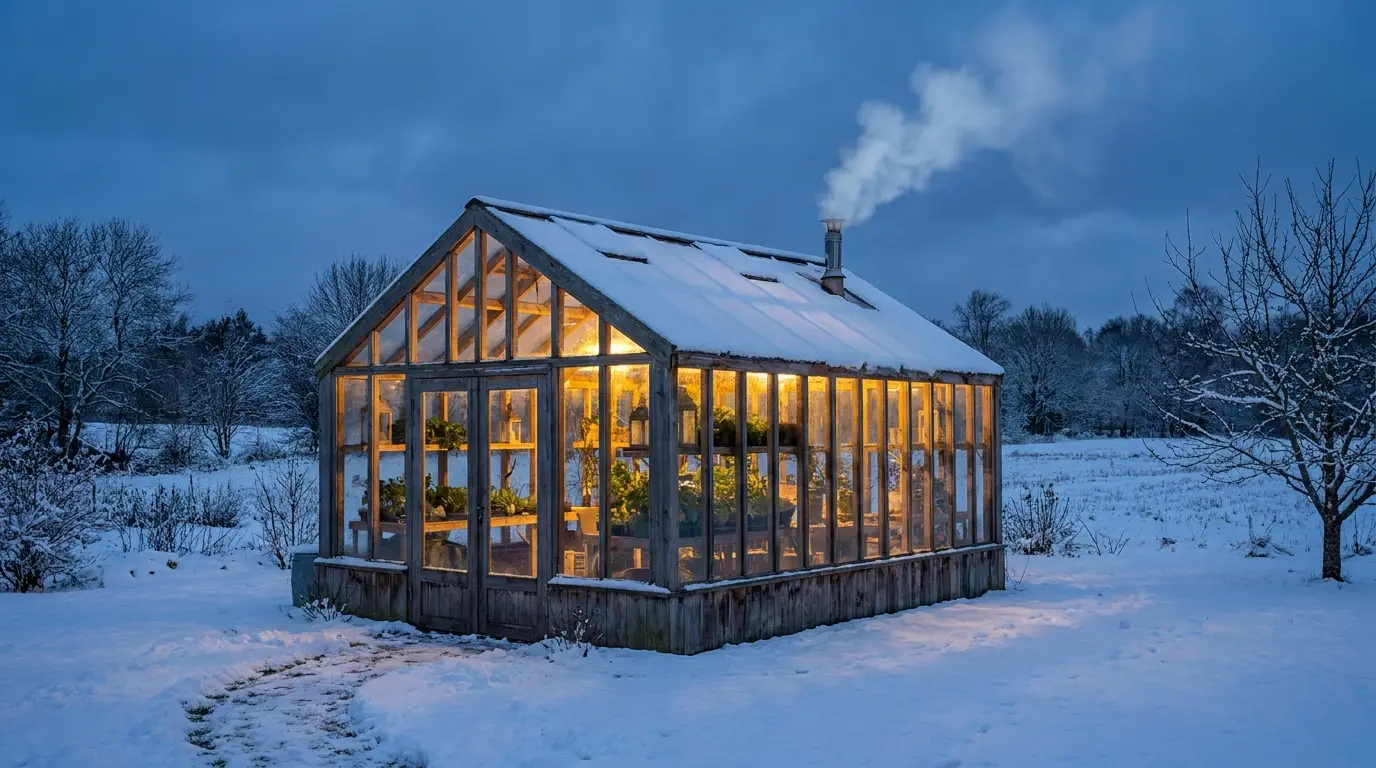
Where the energy goes in a greenhouse
According to research by energy expert Scott Sanford, energy is a greenhouse owner's third-largest expense after labour and seeds/seedlings, and it often exceeds 10% of gross sales. Of that cost, 70–80% goes to heating and 10–15% to ventilation and lighting. Heat leaves a greenhouse in three ways: radiation, conduction and convection, and on winter nights most of the loss goes out through the roof area. The good news is that saving starts before construction: the long south wall of a greenhouse oriented on an east–west axis is warmed by the low winter sun all day long, noticeably cutting heating costs (where to build a greenhouse).
Greenhouse heating options — which one to choose
Warm water (35–38°C) circulates in pipes laid in the soil and keeps the roots at 20–22°C. Effect: 20–30% fuel savings — the air temperature can be lowered to 12–15°C.
Sawdust, straw or corn residues are used instead of gas and diesel. Effect: cheap, local fuel.
Heat storage with water: black 200-litre barrels under the benches warm up in the sun by day and release heat at night. Effect: a free "thermal battery" for a small greenhouse.
Heating cable in a hotbed: an electric cable in the soil with a thermostat — sensor at 5–7 cm depth. Effect: 108–161 W/m² — early seedlings in spring.
Unheated high tunnel: daily solar energy only + cold-hardy crops. Effect: zero heating costs even in winter.
Source: the FAO/UGA-based handbook — "Ten energy-efficient ways to heat your greenhouse".
Root-zone heating is the most energy-efficient because instead of the greenhouse's entire air space it warms the plants' root system directly. A typical 400 m² greenhouse needs ≈960 m of Ø16 mm PEX pipe (laid in the beds in a serpentine pattern at 30 cm spacing), a circulation pump and a 50 kW water boiler — the calculation is based on the 150 W/m² norm over 304 m² of productive beds. XPS insulation boards go under the pipes so heat is not lost into the ground. The key rule: the water supplied from the boiler must not exceed 35–38°C, or the roots will be scorched. Design and installation of such a system is part of our turnkey service.
Greenhouse energy efficiency: where the biggest savings are
Effect of energy-saving measures (maximum, %)
Between the two layers of inflated film a small blower creates a 5–10 cm air cushion — the air must be taken from outside the greenhouse (pressure 50–100 pascals), otherwise the humid indoor air forms condensation between the layers. We cover this system in detail in the covering materials article. A thermal screen — a multi-layer fabric, often with aluminium strips, stretched horizontally above the plants — closes after sunset and, by shrinking the heated volume, saves 30–50% of energy. Perimeter insulation also helps: burying 2.5–5 cm thick XPS foam boards 45–60 cm deep around the foundation.
Do not open the thermal screen all at once in the morning: the air above the screen, strongly chilled overnight, will suddenly dump down and damage the plants with thermal shock. First open a 5–10 cm gap for 20–30 minutes so the cold and warm air can mix, and only then open the screen fully.
The farmer's greenhouse air-sealing checklist
Unintended air leakage through gaps (infiltration) is one of the main causes of winter heat loss. Working through this checklist cuts heating costs by 3–10%:
Air-sealing checklist
0/4Electrical safety and backup power in the greenhouse
A greenhouse is a humid environment and a high-risk zone for electric shock: protect every supply circuit with GFCI breakers tripping at no more than 30 mA; use sealed enclosures rated at least IP65 and moisture-resistant cables in protective conduit. A backup generator is also essential — at least 1 kW per 200 m² of floor (a 400 m² greenhouse needs 2 kW): in winter a power cut will freeze the greenhouse, and in summer stopped ventilation will scorch the plants within minutes.
Frequently asked questions
What is the cheapest way to heat a greenhouse in winter?
First reduce the losses (double film, air sealing, thermal screen), then use root-zone heating — it saves 20–30% of fuel. In a small greenhouse free methods also work well: black water barrels under the benches and choosing cold-hardy crops.
Which covering is better for a cold region?
In harsh-climate zones (for example Samtskhe-Javakheti, where frosts reach −20°C) a capital polycarbonate greenhouse with an insulated north wall is recommended. A turnkey polycarbonate greenhouse costs 200–250 GEL/m², and state co-financing can cover 50% of the cost — programme details.
Do I need a backup generator?
Yes, if your greenhouse depends on fans, a pump and automation. The norm: at least 1 kW per 200 m² of floor — a 400 m² greenhouse needs a generator of at least 2 kW so that the irrigation pump, fans and automatic vents keep working in an emergency.
Will heating help during heavy snowfall?
Yes — it is also an emergency technique: during heavy snowfall turn the heating to maximum and raise the indoor temperature to 15–18°C — the bottom layer of snow will melt and the mass will slide off by itself. With double inflated film, temporarily switch off the inflation blower so the heat reaches the outer layer faster.
Get your greenhouse ready for winter with us
Send us your greenhouse dimensions and region — we will select the optimal combination of heating and insulation and calculate an exact estimate. The consultation is free.