The best place to build a greenhouse is the south or south-east side of your plot — a level area (slope under 2%) that is completely free of shade from 9 a.m. to 3 p.m. and close to water and power. Orientation depends on the season: for winter production point the greenhouse's long side along the east–west axis; for spring–summer production — north–south. A poorly chosen site means less sun, higher heating bills and a risk of wind and snow damage, so weigh this decision carefully before construction starts.
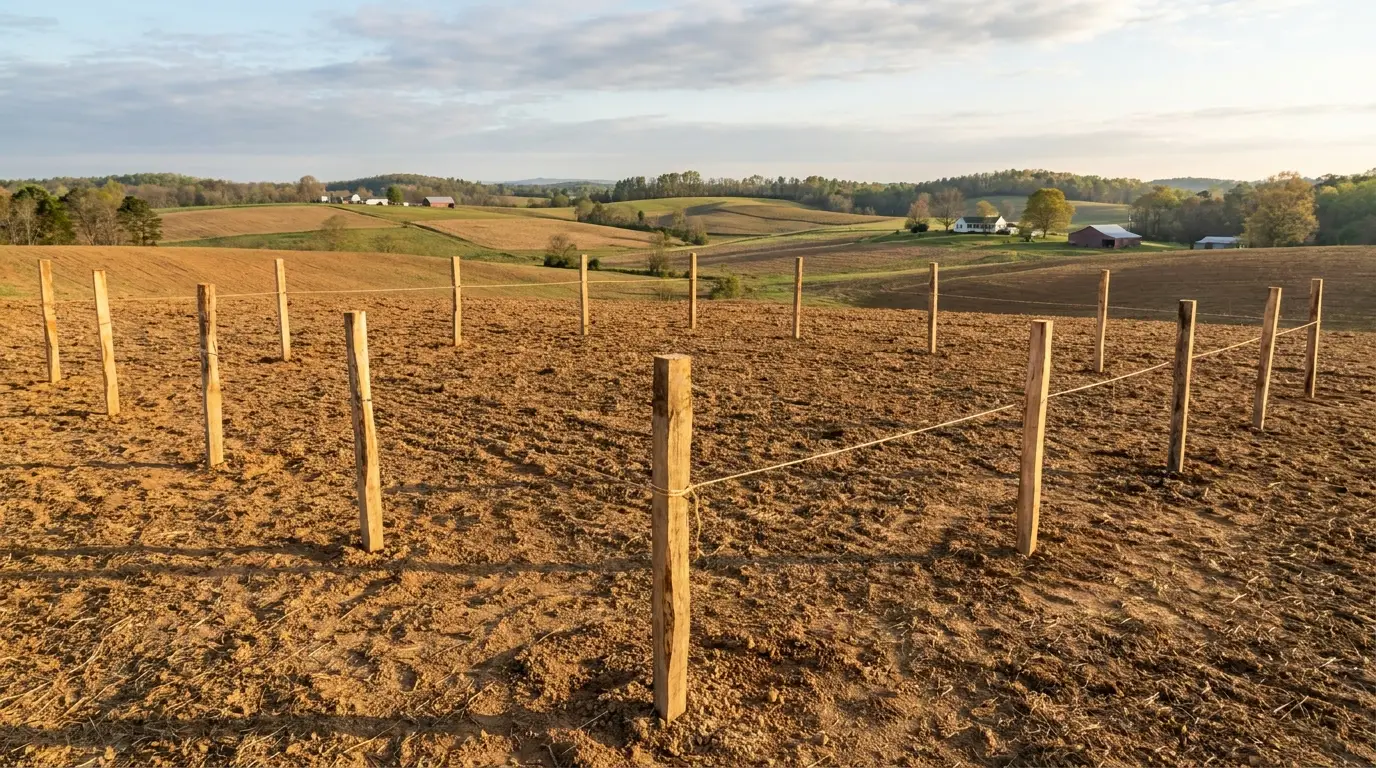
Choosing the greenhouse site on your plot — sunlight decides everything
The first rule is to capture as much sunlight as possible. This matters most in winter, from November to February, when days are short. Here is how the greenhouse's position on the plot affects solar gain and heating costs:
| Position on the plot | Priority | Solar energy | Heating cost |
|---|---|---|---|
| South / south-east | 1 — best | Maximum (from morning to early afternoon) | Minimal |
| East side | 2 — very good | Good (morning sun warms the greenhouse quickly) | Low |
| South-west / west | 3 — average | Good (afternoon sun, overheating risk) | Moderate |
| North side | 4 — worst | Minimal (no direct sun) | Extremely high |
Deciduous trees (walnut, oak) to the west of the greenhouse can even help: on hot summer afternoons they shield it from overheating, and in winter, once the leaves fall, they let the sun through freely. Just avoid dead or dry trees — wind can snap branches and tear the covering.
Greenhouse orientation: east–west or north–south?
Georgia lies between 41° and 43° northern latitude, and two basic rules apply at this latitude — the choice depends on your production season:
For winter production, point the long side east to west — the low winter sun warms the long south wall all day long and noticeably cuts heating costs.
For spring and summer production, a north–south axis works better: as the sun moves, shadows shift and plants receive light evenly, while the summer breeze ventilates the greenhouse more effectively.
Terrain, drainage and utilities for the greenhouse site
The site should be flat and level — building on a slope requires extra spending on terracing and earthworks. Never place the greenhouse at the lowest point of the plot, where rainwater and cold air collect: the soil must drain well, and if needed, dig drainage channels around the greenhouse. A level, well-drained base also makes foundation work much easier.
Plan utilities in advance: put the greenhouse close to the power supply and the water source — running pipes and electric cables over long distances sharply increases start-up costs. Think about size early too: experience shows farmers quickly outgrow a small greenhouse. Build as wide as you can — extending the length later is far easier than widening.
Plan the interior right when choosing the site so no floor space is wasted: side benches along the walls should be 60–90 cm wide (worked from one side), central benches up to 1.8 m (accessible from both sides), work walkways 45–50 cm, and a transport aisle for a wheelbarrow at least 60–75 cm. These dimensions determine what share of the total greenhouse area is actually productive.
Wind, snow and regional climate — what the greenhouse must withstand
In western Georgia (especially near the coast) and in Shida Kartli, in the Mtkvari valley, wind speeds sometimes exceed 30–35 m/s, while in Shida Kartli, Samtskhe-Javakheti and the mountains the structure must carry at least 50–80 kg/m² of snow load. So when choosing the site, identify the prevailing wind direction and align the greenhouse's long side with it — this reduces the force of wind gusts. Engineering the structure for your region is part of our job — see our completed projects across the country.
- Western Georgia (Imereti, Samegrelo, Guria, Adjara) — high humidity and fungal risk: large side ventilation is essential
- Shida Kartli — snow loads and strong winds: reinforced structure, roof pitch of 25°–30°, windbreaks
- Kakheti — spring hail and droughts: reinforced structure and anti-hail nets
- Samtskhe-Javakheti and the highlands — hard frosts (down to −20°C) and heavy snow: a capital structure with polycarbonate covering
Field checklist: assess the greenhouse site on the spot
Greenhouse site selection criteria
0/8If you cannot tick every box, give priority to sunlight — a shaded site cannot be compensated for, while drainage and utility issues can be solved with engineering.
Frequently asked questions about greenhouse siting and orientation
Which orientation is better — east–west or north–south?
At Georgia's latitude (41°–43°), east–west orientation is better for winter production: the low winter sun warms the long south wall all day and heating costs drop. For spring–summer production north–south is better: shadows move and light is distributed evenly.
Can I build a greenhouse on a slope?
You can, but building on a slope requires terracing and levelling, which adds cost. A flat site with less than 2% slope is optimal. For an exact assessment, request a consultation — we evaluate the site at the design stage.
How far should the greenhouse be from trees and buildings?
Tall trees and buildings on the north side should stand at least twice their height away so they cast no shade on the greenhouse. The exception is deciduous trees to the west — they protect against overheating in summer and let the sun through in winter.
Why does proximity to water and power matter?
Running pipes and cables over long distances sharply increases start-up costs. As a guideline: the water source should be within 50 metres, and power close enough for a safe cable run. Factor these costs into the overall budget — details: how much a greenhouse costs.
Have a plot but not sure where to place the greenhouse?
Send us the location and dimensions of your plot — we will pick the optimal spot, orientation and a structure engineered for your region. The consultation is free, and under the co-financing programme the state covers 50% of the cost.