The short answer: among greenhouse covering materials, for most farmers the optimal choice is professional polyethylene film. Agro Ornament’s offered standard is 180-micron, five-component film; the ≈3.50 GEL/m² figure below is a market example for alternative 160-micron professional film, not the price of our standard film. Professional UV-protected film lasts 3–4 years; for year-round intensive production twin-wall polycarbonate is better — it serves 7–10 years and retains heat best of all; glass transmits the most light (90–92%) and lasts over 25 years, but it is heavy, breaks in hail and costs the most. The price scale: a turnkey film-covered greenhouse costs 75–85 GEL/m², a polycarbonate one — 200–250 GEL/m² (full breakdown: how much a greenhouse costs). Below we compare all three materials in numbers so the choice is easy to make.
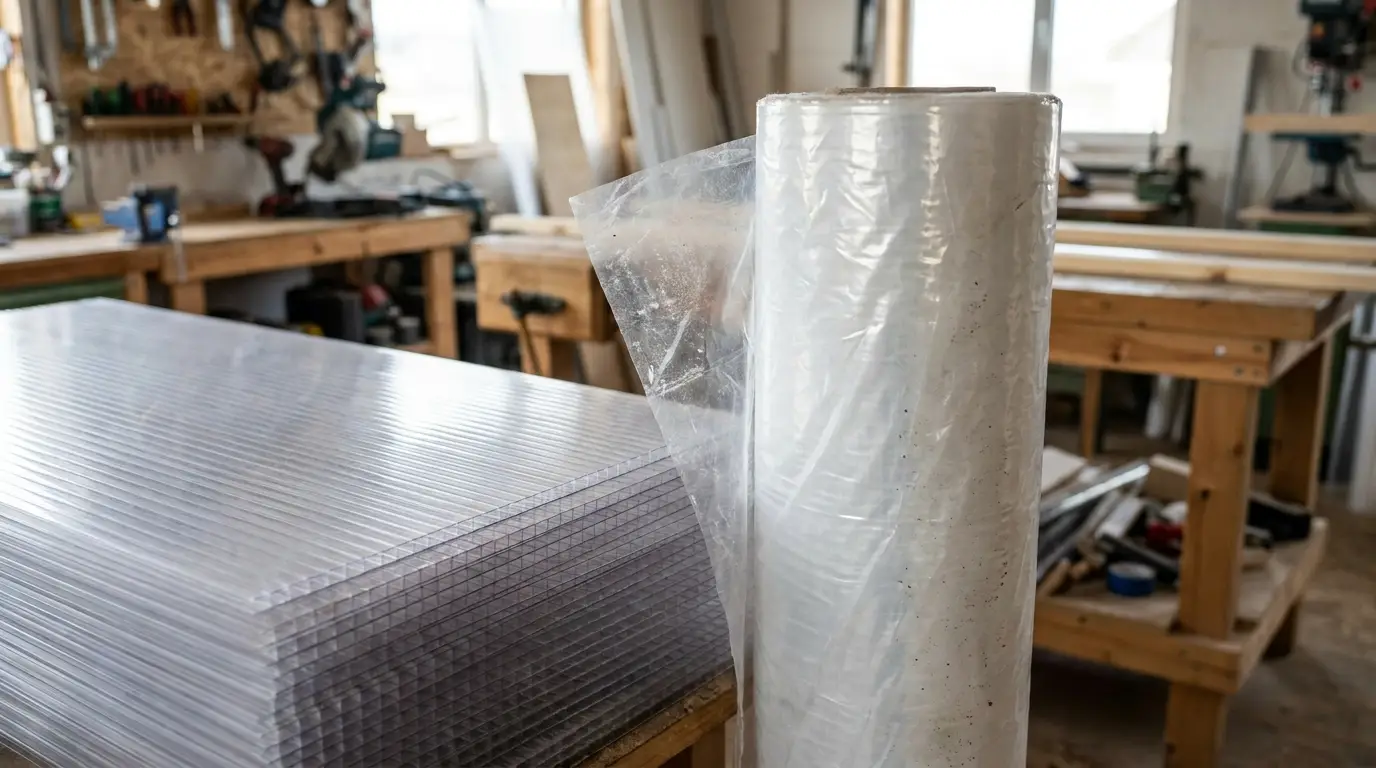
Three covering materials at a glance: pros and cons
Polyethylene film
- Market example: alternative professional 160-micron film ≈3.50 GEL/m²; Agro Ornament’s standard is 180-micron, five-component film, priced separately
- Simple installation and quick replacement when needed
- UV-protected film lasts 3–4 years
- A double inflated system cuts heat loss by 30–40%
- Ordinary (non-professional) polyethylene tears apart in the sun within months
- Single-layer film insulates poorly (R ≈ 0.85)
- Needs renewing every 3–4 years
Twin-wall polycarbonate
- Best insulation (R 1.70–2.50) — winter heating costs less
- Very strong and hail-resistant
- Serves 7–10 years
- The twin-wall structure holds heat well
- High price — a 6 mm sheet (2.1×6 m) costs 180 GEL
- Yellows in the sun without a UV-protective layer
- The surface scratches easily
- Transmits slightly less light than film (75–80%)
Glass
- Maximum light transmission — 90–92%
- Lasts over 25 years
- Does not yellow over time
- Retains heat well
- The most expensive option — 'extremely high' price class
- Heavy — requires a reinforced structure
- Breaks easily in hail
- Cold air enters through installation gaps in winter
Film, polycarbonate and glass in numbers — comparing the properties
The covering defines the greenhouse microclimate: it must transmit light well and retain as much heat as possible. Here is how the four main options look in a table compiled with international methodology (FAO/UGA/NYSERDA):
| Material | Light transmission | Insulation (R-value) | Lifespan | Price class |
|---|---|---|---|---|
| Standard film (PE) | 85–87% | 0.85 — low | 1–3 years | low |
| Double film + IRAC | 76–78% | 1.50 — medium | 3–4 years | moderate |
| Polycarbonate (twin-wall) | 75–80% | 1.70–2.50 — high | 7–10 years | high |
| Glass (double thickness) | 90–92% | 0.90–1.10 — low | 25+ years | extremely high |
The table shows the main trade-off clearly: the better the insulation, the less light the material transmits — polycarbonate has the highest R-value but transmits 75–80% of light, while glass is the opposite: it transmits light almost fully but cannot boast about retaining heat. So for winter production give priority to insulation; for seasonal production — to price and light.
What covering material costs per square metre
Covering material cost (material only, GEL/m²)
For scale, the market example using alternative 160-micron film assumes that a 400 m² (10×40 m) farm greenhouse needs film 16 m wide and 44 m long — ≈2,464 GEL in total, roughly a third of the whole DIY budget. This is not an offer for Agro Ornament’s standard 180-micron, five-component film; its price is confirmed separately. With turnkey construction, material selection, delivery and installation are calculated in a single price — see greenhouse construction services.
Which covering material suits which greenhouse
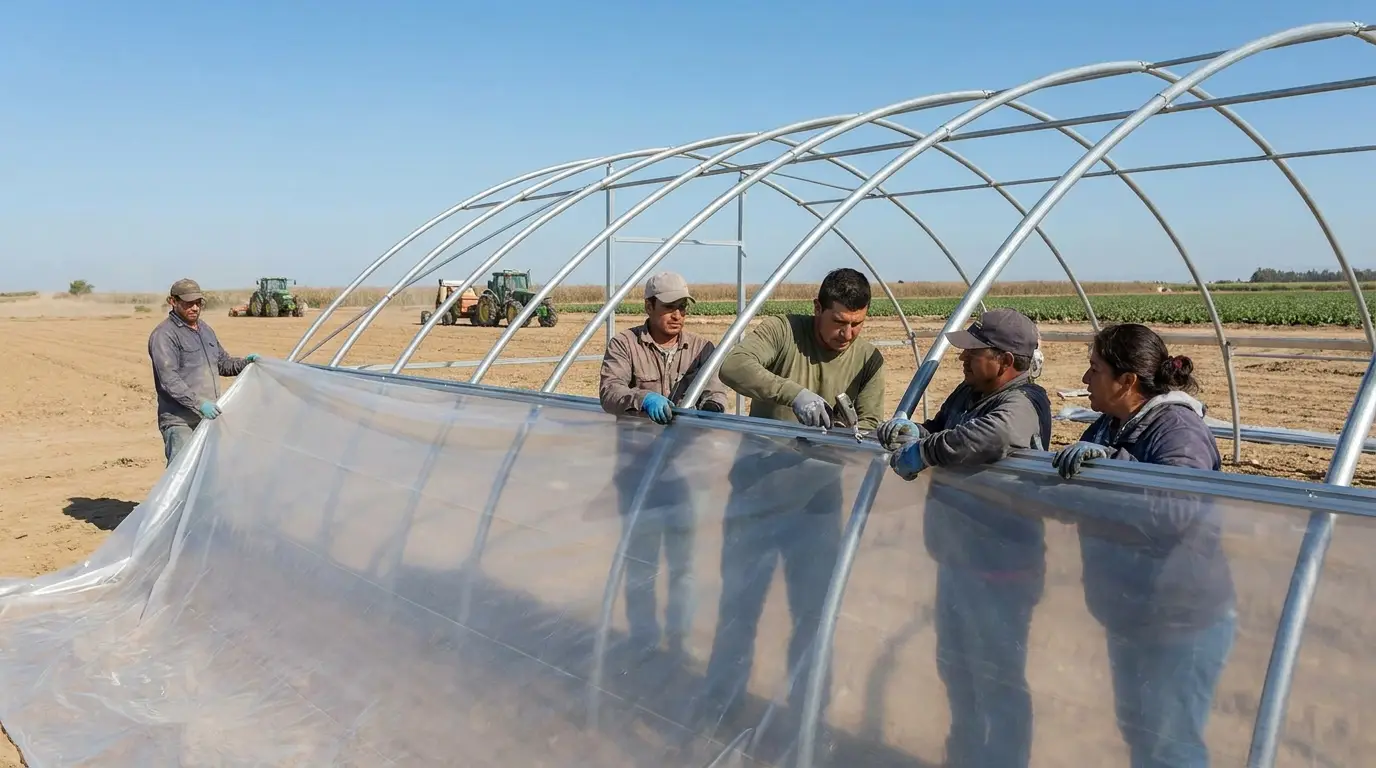
- Arched (tunnel) greenhouse — film: the most common and cheapest combination for seasonal commercial production; the film is fastened to the arches with an aluminium zigzag profile
- Year-round farm production — double inflated film or polycarbonate: both sharply cut heating costs
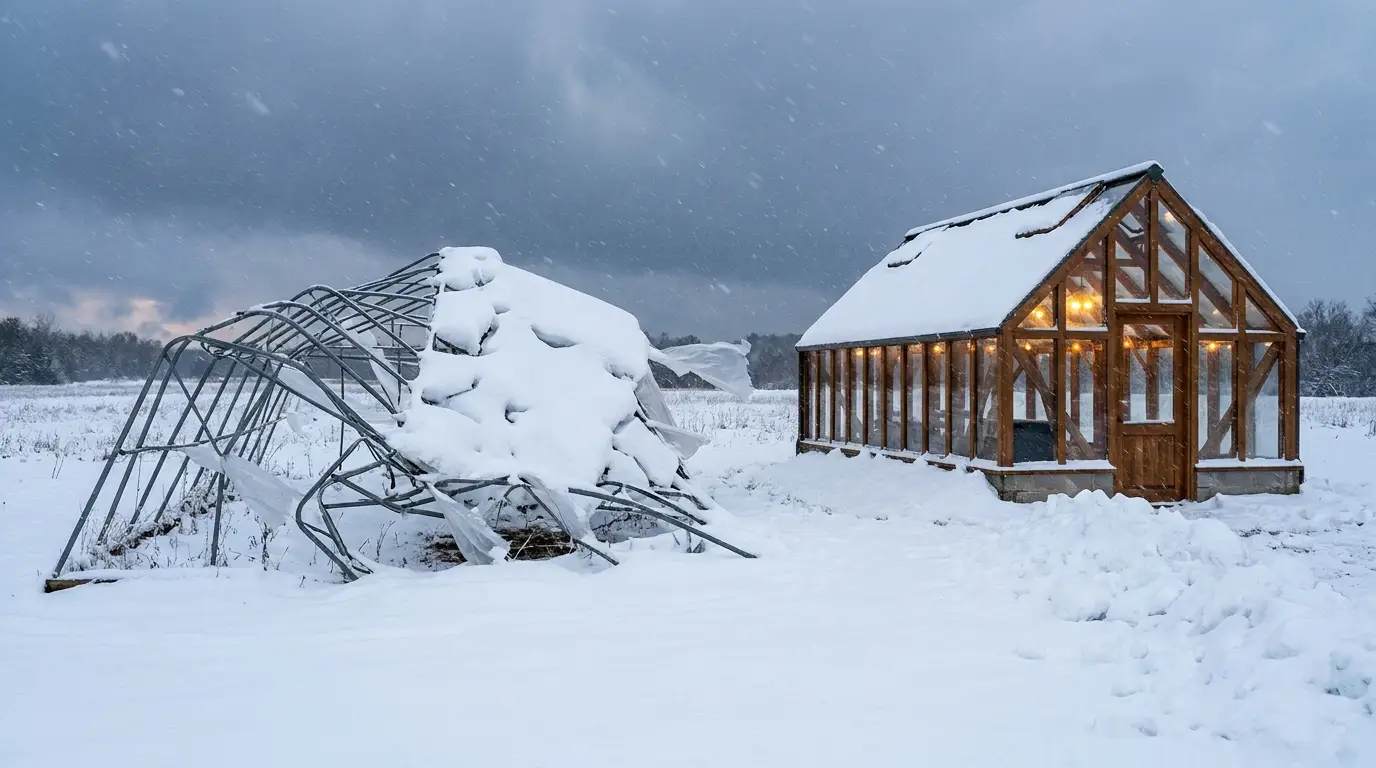
- Small family (gable) greenhouse — polycarbonate: for example, the 3.6×4.8 m timber greenhouse project specifies 6 mm twin-wall sheets, with materials totalling ≈150–160 GEL/m²
- Seedling boxes (hotbed/cold frame) — glass or polycarbonate on a sloped lid
- A permanent premium-class structure — glass: maximum light and a 25+ year lifespan justify the high price
When choosing polycarbonate, the installation rules matter too: the sheets must be mounted with the internal channels running vertically so condensate drains freely; sheets are joined to each other with H-profiles, open ends are sealed with U-profiles, and the sheets are fastened to the structure with special screws with rubber washers. Ignoring these details sharply shortens the material's life.
Double inflated greenhouse film — the sweet spot
If you choose film but worry about heating bills, NYSERDA's recommendation is clear: double inflated film cuts heat loss by 30–40% (in exchange, light transmission drops by ≈10%). Use IRAC film as the inner layer: its anti-condensate (AC) coating stops droplets from hanging on the ceiling — water runs down the walls in a thin sheet, more light gets through, and leaves are not burned by the 'lens effect'. The infrared (IR) additive slows heat escape at night and delivers an extra ≈20% energy saving. The full picture of winter costs: heating and energy efficiency.
Start with film and switch to polycarbonate later if needed — the structure stays the same. That way the initial investment is minimal and you can expand step by step. Which structure suits which material — see greenhouse types and structures.
Check before buying a greenhouse covering
Covering material checklist
0/7Frequently asked questions about covering materials
How long does greenhouse film last?
Ordinary polyethylene tears apart in the sun within months, while professional UV-protected film lasts 3–4 years. Correct installation extends the life too — felt protective tape on the structure and white paint protect the film from contact with hot metal (in summer a pipe heats up to 70°C).
What film thickness should I choose?
Agro Ornament’s offered standard is 180-micron, five-component film. Before purchase, also confirm the UV protection and anti-condensate (AC) properties required by the project in the product data sheet.
Is a glass greenhouse worth it?
Glass gives the best light (90–92%) and lasts 25+ years, but it is heavy, breaks in hail, costs a lot, and cold air enters through installation gaps in winter. For commercial production, film or polycarbonate is more practical; glass suits permanent premium-class structures.
Can I start with film and switch to polycarbonate later?
Yes, that is a common strategy — the structure suits both materials, so changing the covering does not require rebuilding the structure. And half the cost can be covered by state co-financing — details on the programme page.
Can't decide which material suits your region best?
Send us the dimensions, your region and what you plan to grow — we will select the covering and you will receive an exact estimate within 24 hours. The consultation is free.